
Rivian R1T Collision Repair for Tustin Drivers
A Rivian R1T is an aluminum intensive electric pickup with a gear tunnel through the middle of the body, a powered tonneau, a composite bed and adhesive bonded panel joins. OCRV Center repairs them in shop in Yorba Linda for Tustin owners, from bumper work through structural sectioning, with pack inspection and full sensor recalibration before release.
Ballpark range $1,500 to $40,000 at 10 to 200 hours of labor. See the posted rate card.
What makes an R1T body different from a steel pickup?
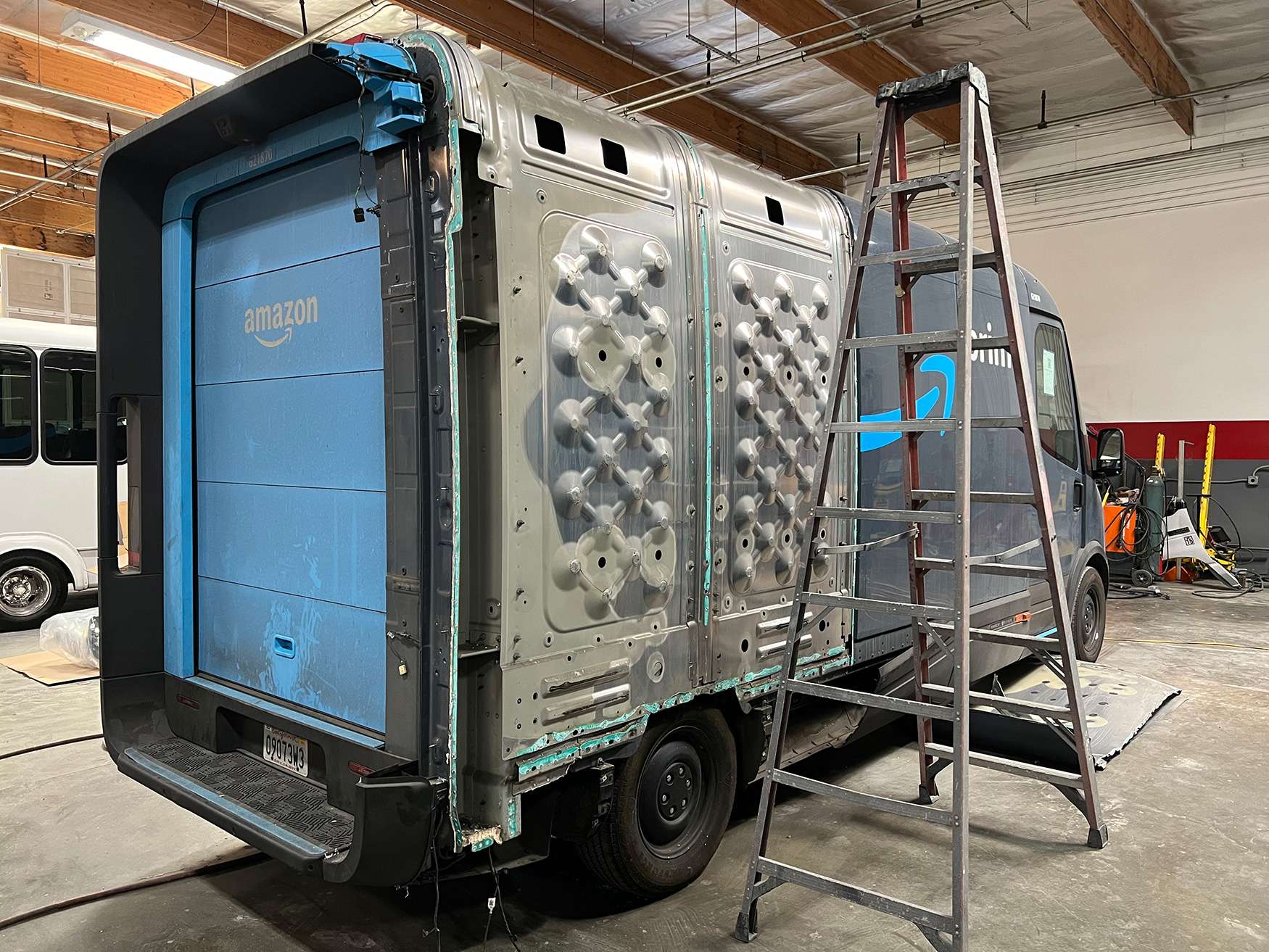
Strip the badges off and the R1T still does not behave like an F Series or a Silverado on the bench. The body is aluminum intensive: large castings at the corners, aluminum stampings for the closures, high strength steel reserved for the safety cage. Aluminum work hardens instead of stretching the way mild steel does, so a dent that a body man would nudge out on a steel fender either comes out with heat control and the right dolly or it does not come out at all.
The practical consequence for an estimate is that panel replacement shows up earlier in the decision tree than an owner expects. That is not upselling. Aluminum has a much narrower window between a good repair and a cracked one, and once a panel is worked past its limit the crack shows through the clear a season later. Collision work on this platform is posted at $1,500 to $40,000 across 10 to 200 hours. Full bands are on the prices page.
How does the gear tunnel load up in a side hit?
The gear tunnel is the R1T feature nobody else has: a sealed, drainable storage pass through between the cab and the bed, with a powered door on each side. Structurally it is a hole punched clean through the middle of the vehicle, and the surrounding structure is engineered to carry the load the missing sheet metal would otherwise carry.
So when a truck takes a side hit at the rear door or the leading edge of the bed, the tunnel is where the energy goes. Signs we look for before a single panel comes off:
- Tunnel door will not latch or self closes crooked
- The opening has racked. That is a structural measurement, not a latch adjustment.
- Water in the tunnel after the strike
- The seal path has moved or the drain has been pinched. Both mean the aperture geometry changed.
- Bed to cab gap tight on one side, wide on the other
- Classic diamond in the middle section. It gets measured on the bench before any repair is authorized.
- Rear door check strap suddenly notchy
- The B pillar and rocker took part of the load and moved the hinge plane.
Owners tend to describe this as a scrape on the door. It is frequently not.
What happens to the powered tonneau and the frunk after a hit?
The powered tonneau rides in tracks along the top of the bed rails. Bend a bed side and the track goes out of parallel, at which point the cover binds, the motor draws current it should not, and the owner hears a clunk at the halfway point. The cover itself is rarely the failed part. We check track parallelism with a straight edge and a tape before condemning any motor, because replacing a motor into a bent track buys you the same complaint in a month.
At the other end, the frunk is a deep aluminum tub under an aluminum closure panel with its own latch, strut set and drain. A front corner impact that looks like bumper cover damage will often have shifted the frunk aperture enough that the lid sits proud on one side. That is a hinge and aperture measurement, not a shim job. Frunk closures also carry the forward camera washer line on some builds, so the harness routing gets checked before the panel is pulled.
Why does a rocker strike trigger a pack inspection?
Quad motor and dual motor R1T builds package the drive units at the axles and the battery in a flat pack under the floor, bolted in as a structural element. The rocker is the outer edge of that sandwich. A curb strike, a parking block, a piece of retread off the 91, anything that loads the rocker inboard loads the pack mounting rail as well.
So a rocker hit on this truck gets the underside opened up. We look at skid plate deformation, witness marks on the pack case, coolant weeping at the plate fittings, and torque pattern on the mounting hardware. Documented pack evaluation is what the manufacturer procedure asks for and what a carrier needs to see before authorizing anything downstream. It also protects the owner: a pack that has been struck and not evaluated is a problem that surfaces months later with nobody left to bill.
Can bonded and riveted joints be MIG welded like steel?
No, and this is the line where a general shop should hand the truck off. Panel joins on the R1T rely on structural adhesive, self piercing rivets and flow drill screws. Those joints are engineered systems: bead width, open time, rivet die and punch selection and cure conditions are all specified. A MIG weld in place of a rivet line does two things wrong at once. It puts heat into aluminum that loses its temper permanently in the heat affected zone, and it replaces a distributed load path with a stress riser.
Our aluminum work happens in a separated area with dedicated tooling so steel dust never lands on an aluminum panel and start a corrosion cell. Sectioning happens only where the procedure permits sectioning. Corrosion protection is restored at every joint we disturb. We stand behind our work.
What does a tri color or matte finish do to a blend?
Rivian ships tri color builds and matte finishes, and both make a spot repair harder than the damage suggests. A tri color needs the ground coat, the mid coat and the clear all laid to the correct film build, and the mid coat is where the color actually lives, so a heavy or light pass reads instantly against the adjacent panel in daylight. We spray let down panels first and check them outside, not just under booth light.
Matte is stricter still. There is no polishing a matte finish back into agreement, because gloss level is set by the coating chemistry and the spray technique, not by buffing. A matte repair is either right off the gun or it gets redone, and the blend usually has to run to a natural break rather than dying off mid panel. Expect $500 to $5,000 at 4 to 25 hours for color match blending on a job like this, and expect us to recommend blending into more panels than a solid gloss color would need.
What is included
- High voltage disable, isolation and zero volt verification logged on the repair order
- Underside and battery pack skid plate inspection with photographs for the claim file
- Published repair procedure and position statement pull before the estimate is written
- Structural adhesive, self piercing rivet and flow drill screw joints restored to specification
- Corrosion protection reapplied at every joint disturbed during the repair
- Post repair ADAS scan and recalibration of affected radar, camera and ultrasonic sensors
- Let down panel sprayed and checked in daylight before any tri color or matte blend is committed
Questions we get asked
Is the gear tunnel repairable or does it mean the truck is totaled?
It is repairable in most cases. What matters is whether the aperture can be measured back to specification on the bench and whether the procedure allows sectioning at the damaged point. We measure first, then tell you, rather than guessing from a photo.
My tonneau binds after a bed side dent. Do I need a new cover?
Usually not. The tracks along the bed rails go out of parallel when the bed side moves, and the cover binds against them. Straightening the rail and restoring track parallelism fixes the symptom. Replacing a motor into a bent track just repeats the failure.
How long is an R1T repair going to take?
Posted labor on van and light truck collision runs 10 to 200 hours depending on scope. Aluminum panel work, bonded joint cure time, pack evaluation and calibration all add real hours, and a structural job will sit longer than the same damage on a steel pickup.
Do you handle the insurance side on a Rivian claim?
Yes. We bill Tesla, Progressive, GEICO, State Farm, AAA SoCal, Mercury, Allstate, Liberty Mutual and the other major carriers direct, and there is no charge for insurance walk ins. Supplements are written against the published repair procedure so they hold up.